Industry Expertise
Trades & Services
Practical SHEQ solutions for electricians, plumbers, carpenters and allied trades working across residential, commercial and industrial sites.
Industry Overview
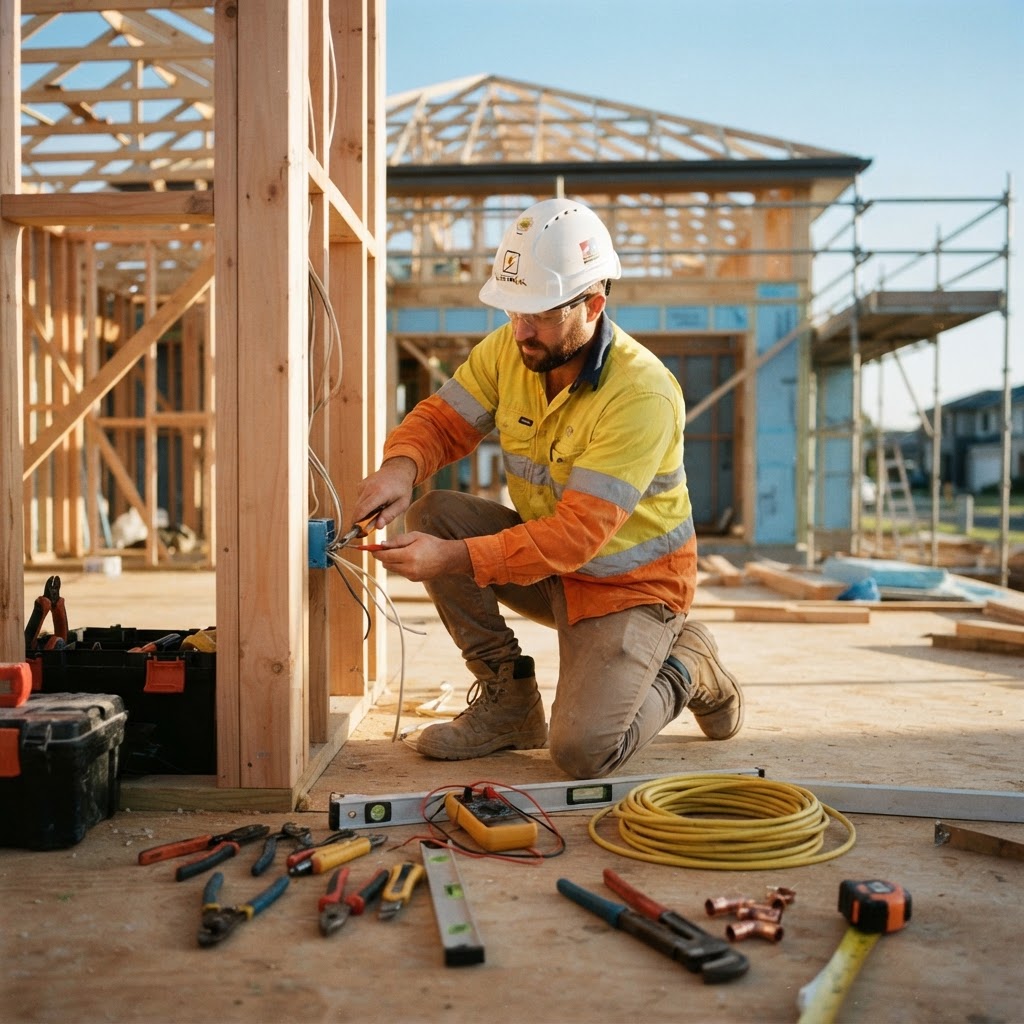
Trades and services businesses form the backbone of Australia's construction and maintenance activity — and operate in one of the most dynamic risk environments. Electricians, plumbers, carpenters, refrigeration mechanics, tilers, painters and other tradespeople move between sites, clients and building phases, exposing them to live services, working at heights, silica dust, hot work, hazardous manual tasks and the coordination challenges of multi-employer worksites. Layered over these hazards are licensing, certification and documentation obligations that regulators and clients expect to see. SHEQ Management brings practical, trade-aware experience that helps tradies build simple, workable systems that keep workers safe, keep work compliant, and keep the business competitive.
Key Risks & Requirements
Electrical Hazards
Electricians and allied trades face live work, arc flash and residual current hazards requiring isolation, lockout/tagout, test-before-touch and safe approach distance controls.
Hot Work & Fire
Welding, grinding, brazing and soldering introduce ignition and fire risks requiring hot work permits, fire watch, housekeeping and suitable extinguisher controls.
Working at Heights
Roofing, gutters, ceiling spaces and elevated installations require fall prevention, harness systems, ladder safety and edge protection for trade work at height.
Hand & Power Tools
Grinders, drills, saws and pneumatic tools cause laceration, amputation and vibration hazards requiring guarding, correct selection, maintenance and PPE.
Hazardous Manual Tasks
Lifting materials, pipework and equipment, awkward postures and repetitive work contribute to musculoskeletal injury — requiring mechanical aids, task design and manual handling controls.
Noise
Grinders, power tools, compressors and demolition work expose tradespeople to hazardous noise requiring hearing protection, noise assessment and audiometric monitoring.
Dusts & Airborne Hazards
Silica dust from concrete/brick cutting, asbestos, lead and welding fumes require dust suppression, RPE, on-tool extraction and atmospheric monitoring for tradies.
Slips, Trips & Falls
Cluttered sites, trailing leads, wet floors and uneven ground create slip, trip and fall hazards requiring housekeeping, cable management and maintained access.
Other Trades On-Site
Working alongside builders and other subbies introduces multi-employer coordination, concurrent activities and shared hazards requiring site coordination, permits and communication.
Outdoor Work
Roofing, external installations and site work expose tradespeople to UV, heat and weather extremes requiring sun protection, hydration and scheduling controls.
Confined & Restricted Spaces
Ceiling spaces, underfloor areas, pits and roof cavities present atmospheric and entrapment hazards requiring entry controls, ventilation, gas testing and rescue plans.
Electrical & Utility Isolation
Interacting with live services, switchboards, gas and water supplies requires service location, isolation, permit-to-work and verification of de-energisation.
Demolition & Structural
Partial demolition, structural alteration and removal work introduce collapse, falling debris and concealed-service hazards requiring sequencing, shoring and exclusion zones.
Licensing & Competency
Electrical, plumbing and gasfitting work is licensed and regulated — requiring trade licensing, supervision of apprentices and verification of competency for high-risk work.
Documentation & Compliance
Trades businesses need SWMS, test & tag records, safe work procedures, certificates of compliance and safety management plans to satisfy regulators and clients.
Some of Our Services in this Industry
Explore the SHEQ services we offer that are most relevant to the Trades & Services sector.
Articles & Blog

SHEQ Management Joins the Henderson Alliance
At SHEQ Management, we believe strong businesses are built through strong connections. That is why we are proud to be a member of the Henderson Alliance, connecting us with businesses, industry leaders and organisations working to strengthen the Henderson and Kwinana industrial precinct in Western Australia. For us, joining the Henderson Alliance is about more than membership. It is an opportunity to connect with local industry, share knowledge, understand the challenges businesses are facing and contribute our expertise in Safety, Health, Environment and Quality (SHEQ).
7 Sep 2026
Don’t Shoot The Messenger. Especially When They are Trying to Help
We all expect great service. But when a crisis hits, frustration can quickly end up directed at the very people working hardest to fix the problem. This isn’t just about customer service. It’s about the human cost of how we treat suppliers, contractors and advisers when the pressure is on.
4 Aug 2026